
The Story Of Figure This Out!
How did a video game guy decide to create a table-top party game?
I’ve been in the video game business for over four decades. Since the mid 2000s, mainly mobile games. But the truth is, in too many cases, mobile games are glorified “Skinner Boxes.”
A Skinner box typically contains a lever (for rats) or a response key/disk (for pigeons), which dispenses food or water. Skinner tested different schedules of delivery. He discovered that if animals received a reward every time they pressed a lever (continuous reinforcement) or after a predictable number of responses (fixed-ratio), they would stop pressing once they were full or bored. Skinner discovered that if animals received a reward every time they pressed a lever (continuous reinforcement) or after a predictable number of responses (fixed-ratio), they would stop pressing once they were full or bored. If rewards were delivered after an unpredictable number of responses, then pigeons and rats pressed the levers frantically, continuously, and at a steady, rapid pace. Even if rewards stopped entirely, the animals would keep pressing the lever for a very long time before giving up. Mobile game developers explicitly map this onto game loops to maximize retention and monetization.
I sacrificed game revenue by going with less exploitative monetization. For example, in “Stick Figure Movie Trivia,” players get a free “Movie Of The Day” puzzle and have the option to purchase “unlimited play” for a one-time purchase.
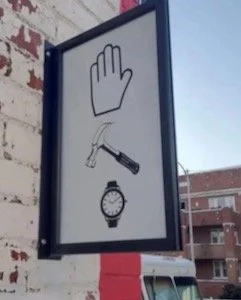
Then, in November 2025, I saw this posted on Facebook:
I started sharing puzzles on Reddit groups. This was one of my first:
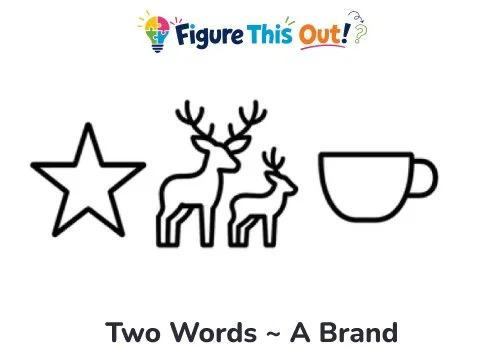
Buck up for some caffeine.
I posted this on Reddit, and it garnered over 400,000 views. I started creating puzzles and posting them on Reddit daily. The number of views has reached close to 20 million since November.

From the 1977 Film: “Close Encounters Of The Third Kind.”
I knew this might mean something, so I started showing puzzles at parties and other gatherings. People liked trying to figure out the puzzles.
During a holiday party in December, a woman named Tess said after looking at some of my puzzles, “Do one with a holiday wreath and a $100 bill.”
Frankly (hint), I was confused, but my wife Leah got it.
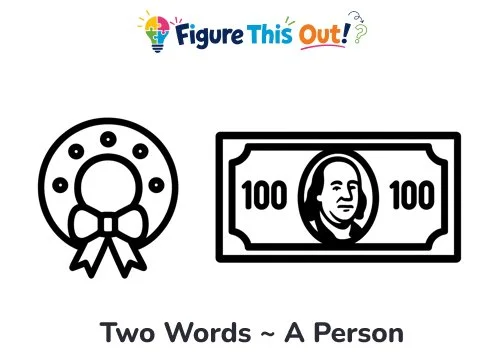
(A famous singer, respect is the clue here.)
So my wife and I started to come up with puzzles, and now we have over 300 of them.
I started to believe that this could work as a party game. No learning curve; just show a card and see who can “Figure This Out.”
There are some real challenges to creating a successful party card game. More on that later.
